


In Conversation with Vicent, our Spanish Motorcycle Tour “Fixer": Why Auxiliary Lights Can Be Illegal in Spain
- Oly Truman

- Jul 5
- 5 min read
Auxiliary lights can be illegal in Spain and that catches a lot of riders out. Many touring bikes arrive fitted with LED spotlights or fog lights on crash bars and plenty of people assume that if the bike is road legal at home, it will be fine abroad too. That is not always the case. In Spain, those extra lights can lead to a roadside fine if they are switched on in the wrong conditions.
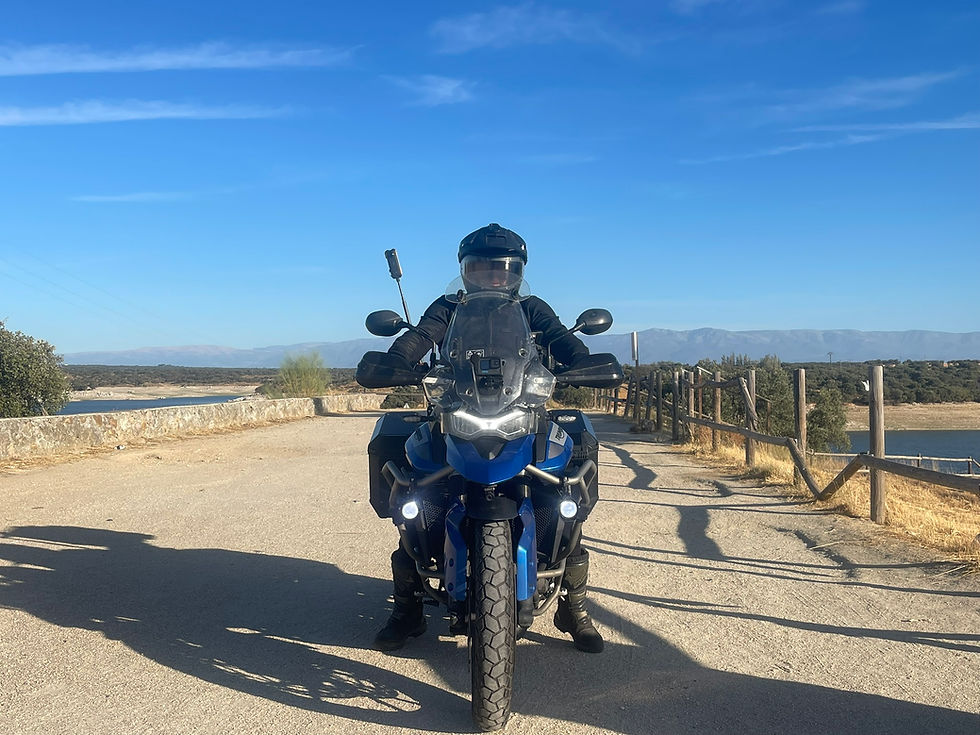
To clear up the confusion, here is a straightforward chat with Vicent, our local Spanish "fixer" and friend who regularly helps riders travelling through the country.
Understanding the rule
What is the main thing riders need to know?
The simple message is this: auxiliary lights can be illegal when they are being used in normal clear conditions in Spain. Riders often fit extra lights for visibility or styling, and they are extremely common on touring and adventure bikes. But in Spain, using them as everyday running lights is where the problem starts.
That is the key point. The issue is not just having them fitted. The problem is having them turned on when the weather and visibility do not justify their use.
Why does this surprise so many riders?
Because these lights are everywhere. British and other foreign riders often travel with bikes that have auxiliary lamps mounted low down, especially on bigger machines used for long trips. Many have ridden through Spain several times without ever being stopped, so they assume there is no issue.
That creates a false sense of security. A rule can still apply even if enforcement seems inconsistent. Vicent’s point is that local police can and do act on it, and that is what matters when you are the one pulled over.
When can you use them?
Are auxiliary lights always banned?
No. The practical distinction is weather and visibility. If there is fog, low cloud or similarly poor conditions, those lights may be used. In other words, they are for the type of situation where extra lighting is genuinely needed.
But if you are riding through bright sunshine, clear mountain roads, or dry open countryside with good visibility, then the legal justification is gone. In those circumstances, auxiliary lights can be illegal if they are switched on.
So if the weather is perfect in Andalucía, should they stay off?
Yes. That is exactly the kind of example riders need to keep in mind. If you are enjoying a warm, clear day in southern Spain, those extra spotlights or fog lights should not be lit just because you like the look of them or think they make you more noticeable.
That is where some riders get caught. They treat the lights as part of their bike’s normal daytime setup, while the authorities may see them as equipment being used outside the conditions intended.
What can happen if you ignore the rule?
Is this just a technicality, or do police really stop riders for it?
It is not just theory. Vicent shared an example from the Pyrenees where a rider was stopped by police over auxiliary lights and received a fine. The amount was remembered as around 100 euros.
That is enough to turn a great touring day into an expensive and frustrating one. It also shows that while many riders may get away with it for years, enforcement does happen. And when it does, saying that you have done it before without trouble is unlikely to help.
Why is there so much confusion around this?
A lot of confusion comes from cross border assumptions. Riders naturally compare rules between countries, and what is acceptable in one place may feel normal everywhere else. But Vicent makes the distinction clearly: rules that might be tolerated or structured differently in England should not be assumed to apply in Spain.
That local knowledge matters. Touring abroad means adapting not only to road signs, speed limits, and police practices, but also to equipment laws that can be easy to overlook.

Common mistakes riders make
What are the biggest misunderstandings about auxiliary lights?
Assuming fitted means legal to use at any time. A bike can have the lights installed, but using them in clear conditions can still be a problem.
Thinking previous trips prove it is fine. Just because you have ridden in Spain before without being stopped does not mean the rule does not exist.
Treating fog lights like daytime running lights. That casual everyday use is exactly what may lead to attention from police.
Believing foreign registration gives leeway. It does not remove your responsibility to follow local road law.
Do riders need to remove the lights before travelling?
Nothing suggests that every rider must strip the bike down before entering Spain. The practical lesson is more immediate than that: know what the lights are for, and do not switch them on unless conditions justify it.
For most riders, the easiest solution is simple discipline. If the weather is clear, leave them off. If visibility genuinely drops because of fog or low cloud, then their purpose becomes relevant.
How to stay out of trouble on tour
What is the safest approach for riders entering Spain?
Use a cautious, local-law-first mindset. If your bike has LED spotlights, crash bar lights, or fog lamps, assume they are not part of your normal daytime riding setup in Spain. Keep them off unless the conditions are poor enough to support their use.
That approach removes the grey area. It also avoids the roadside debate where you are trying to explain that you always ride like this back home.
What practical checklist would you recommend?
Before crossing into Spain, identify any auxiliary or fog lights fitted to your bike.
Check how they are switched on and off, especially if they come on automatically with another lighting mode.
In clear daytime conditions, keep them off.
Use them only when visibility is genuinely reduced, such as in fog or low cloud.
Do not rely on what other riders are doing around you.
Remember that local police enforcement is what counts on the road.
Why this matters beyond the fine
Is this only about avoiding a 100 euro penalty?
No. The bigger issue is travelling well and respecting the country you are riding through. Motorcycle touring in Spain is fantastic, with superb roads, mountain routes, and long stretches of beautiful weather. The last thing you want is unnecessary hassle over something easily avoided.
Knowing that auxiliary lights can be illegal in the wrong conditions helps you travel more smoothly. It keeps your focus where it belongs, on the roads, the scenery, and the ride itself.
What does this say about touring in another country generally?
It is a good reminder that successful touring is not just about route planning and packing. It is also about local knowledge. Small legal differences can catch out even experienced riders, especially when they involve equipment that has become second nature at home.
The best trips usually come from combining confidence with humility. Be experienced, but stay open to local advice. That is especially true when the advice comes from someone who lives and works with riders in Spain.

Final word for the road
If riders remember only one thing, what should it be?
Remember this: auxiliary lights can be illegal in Spain when used in clear conditions. If there is fog or low visibility, that is a different matter. But on a bright day, those extra lights are better left off.
It may feel controversial because so many bikes have them and so many riders use them casually. Still, the safer choice is obvious. Follow the local rule, avoid the fine, and keep the trip running smoothly.
Ride cool. Ride safe. Ride Spain.


Comments