


Navigating the Plymouth to Santander Ferry: A Comprehensive Motorcycle Guide for Beginners
- MTTS
- Jun 12
- 6 min read
Riding a bike to Spain is a dream for many, but the trip through France can be a slog. You can spend days on boring highways or potentially get lost on back roads, eating up your actual holiday time. For us, the Plymouth to Santander ferry changes that. It turns a tiring transit into a relaxing break where you can eat, sleep, and watch for whales while your bike hitches a ride.
Why Choose the Ferry for Your Motorcycle Trip?
Choosing this route is mostly about getting more time in Spain, assuming that is your goal. If you ride through France on the motorways, you are looking at two days each way. That is four full days of riding just to get there and back. On a ten-day trip, losing nearly half your time to transit is a bad trade. And if you prefer the scenic route through the French countryside, it gets even slower. Back roads can take three days each way. By the time you reach the Spanish border, you might be too tired to enjoy the scenery. The ferry cuts this travel time down significantly. It's a contentious subject with many, but we prefer getting to Spain on the ferry.
The Holiday Starts Now Experience
The ferry is not just a way to get from A to B. It is the first part of your holiday. You can stop worrying about traffic, fuelling up, finding a hotel and the cost of inevitable tolls. Once you are on board, you can kick back. It is a mental shift that lets you relax before the real adventure in Spain begins. You won't be bored during the short 24-hour trip. There are several spots to hang out and a variety of ways to pass the time.
You have access to restaurants and bars and for those who like a bit of fun, the ship always has live, evening entertainment. You might find a magician on board or join in on some trivia quizzes. It is a sociable atmosphere where you can meet other riders and travellers.
One of the best parts of the trip is the view from the deck. The waters between the UK and Spain are home to some amazing animals. Many passengers spot dolphins playing in the wake of the ship. Some even see whales. It adds a bit of nature to the transit.
The Motorcycle Boarding Process: Step-by-Step
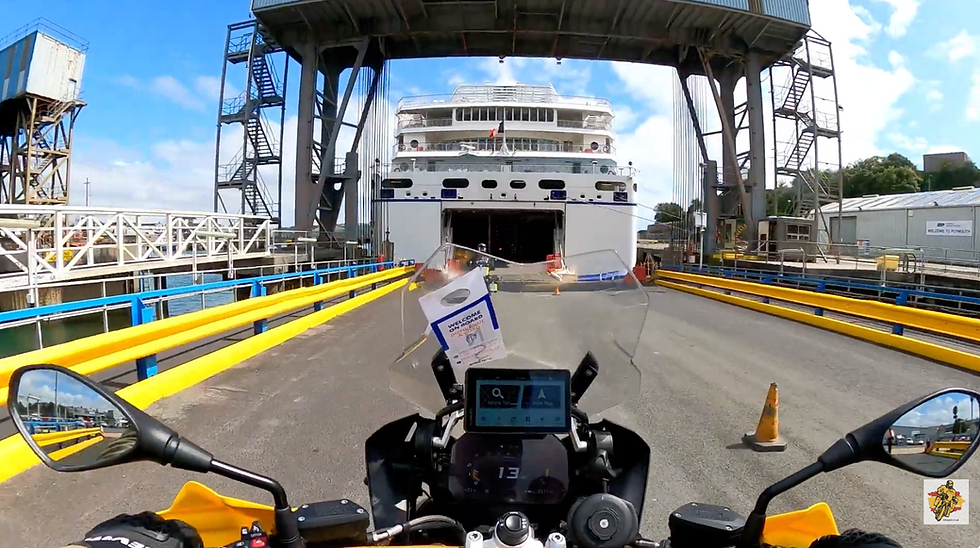
You start by going through passport control and receiving your boarding pass and cabin keycard. You secure the boarding pass to your screen with provided tape. Try not to rush yourself, if you want to move out of the way, you can pull up just after the cabin to store your passport and secure the boarding pass.
Boarding a massive ship on two wheels can feel a bit scary at first. However, the crew make the process fairly simple. They have a system to make sure every bike gets in and stays put. Follow your indicated lane.
Motorcycles generally go on the ship before the cars. This is a huge plus for riders. You don't have to fight through a sea of cars to find your spot. You get on early, get settled and can be up in your cabin, taking a shower, while the cars are still queuing at the dock.
Following Crew Instructions
The crew knows the deck layout better than anyone. They will wave you forward or tell you exactly where to stop. Do not rush. There is no need to feel pressured. Just look for their hand signals and take your time moving into your slot. It can feel like you are in the way, just try to relax your shoulders to stay calm.
When you ride down the slope into the hold, keep a steady pace, leaving plenty of stopping distance between you and the bike in front. Ignore what is going on behind you! Space can get tight, especially if you have a larger touring bike. Just take it slow and stay aware of your surroundings.
Look at the floor as you enter and you will see yellow 'humps' and cables running along the deck on both sides. These are the anchor points; try to ride between the humps. You will also see blue pads. These are used to protect your seat from the straps the crew uses to tie the bike down.

Securing Your Motorcycle: Crew Assistance and Your Role
You aren't expected to tie your own bike down. The crew handles the heavy lifting to make sure nothing moves during the crossing. They will place a blue pad on your seat, then, they use heavy-duty ratchet straps to pull the bike tight against the floor cables. It can look a bit brutal but this keeps the bike secure, even if the sea gets a bit choppy.
The crew will judge where your bike fits best. If you have a skinny bike, they might put you in a narrow gap. If you have a "chunky monkey" of a bike, they will find a wider space. Trust their judgment on where you fit.
Preparing Your Motorcycle and Gear for the Crossing
Once the bike is in its slot, you need to clear off your gear. You don't want to carry everything to your cabin, but obviously you can't leave valuables exposed.
If you have a Sat Nav or a phone mount, don't forget to remove those devices. Also, unplug any charging cables for power packs or phones to keep things tidy.
Use a dedicated, easy to remove, small ferry bag for your overnight essentials and a change of clothes. You can store your gloves and small electronics in there, or in an additional tank bag for example. This keeps your gear in one place, you'll know exactly where it is, so you aren't running back down to the hold - it is 4 flights of stairs from the main deck, nobody wants that! Using a small bag in this way means that you aren't lugging huge bags of stuff around that you won't need just for one night.
Securing Your Helmet and Valuables
While ferry holds are generally safe, it is better to be safe than sorry. You don't want to worry about your gear while you are trying to enjoy a beer on deck.
You can leave your helmet on the bike if you use a lock. A small cable lock with an alarm works well. Thread the cable through the chin guard of the helmet and wrap it around a grab rail or a sturdy part of the bike. Just remember to turn off the alarm so the movement of the ship doesn't set it off.
Electronics are the main target for theft. Always take your Sat Nav and phone with you. These should go straight into your tank bag or your carry-on luggage. Once you have your keys and your bags, you can leave the bike to the crew.

Onboard Life: Making the Most of Your 24-Hour Journey
The cabins are a great place to crash. They come with air conditioning/central heating, which is a lifesaver if the ocean breeze gets chilly. Cabins also have a radio and a private bathroom.
Head up to the deck to see if you can spot some whales. Visit the bars to chat with other travelers or find the live music. The goal is to relax and recharge your batteries for the riding that awaits you in Spain.
Post-Arrival and Disembarkation Tips
When the ship hits Santander, the process happens in reverse. You'll need to head back down to the, usually noisy, hot and stuffy, hold! It can take some time before bikers are allowed down to deck 2, where your bike has been on the sailing, and you don't want to get stuck in the stairwell in a stuffy, leather-clad group of bikers!!
Simply hang out on deck in the fresh air and stay alert for the announcement that motorcycles can disembark. Once they give you the nod, head down and check that your bike is free from the straps. If not, and you struggle to get the ratchet off, most people will give you a helping hand, don't be afraid to ask!
Final Checks and Security
Do a quick walk-around of your bike and make sure your luggage is still secure after the vibrations of the trip. Once you are cleared, you can ride up and off the ramp, through passport control and start your Spanish adventure.
The perfect way to start a great road trip. Now, pack your bags and get ready for the open road.


Comments